
CAN COCONUT WASTE BE A TOOL FOR CLIMATE AND COMMUNITY RESILIENCE?
Supported by Swiss Arts Council Pro Helvetia
Local Partner on Site Lokal Lab Siargao
Material Exploration - PHILIPPINES October 2025
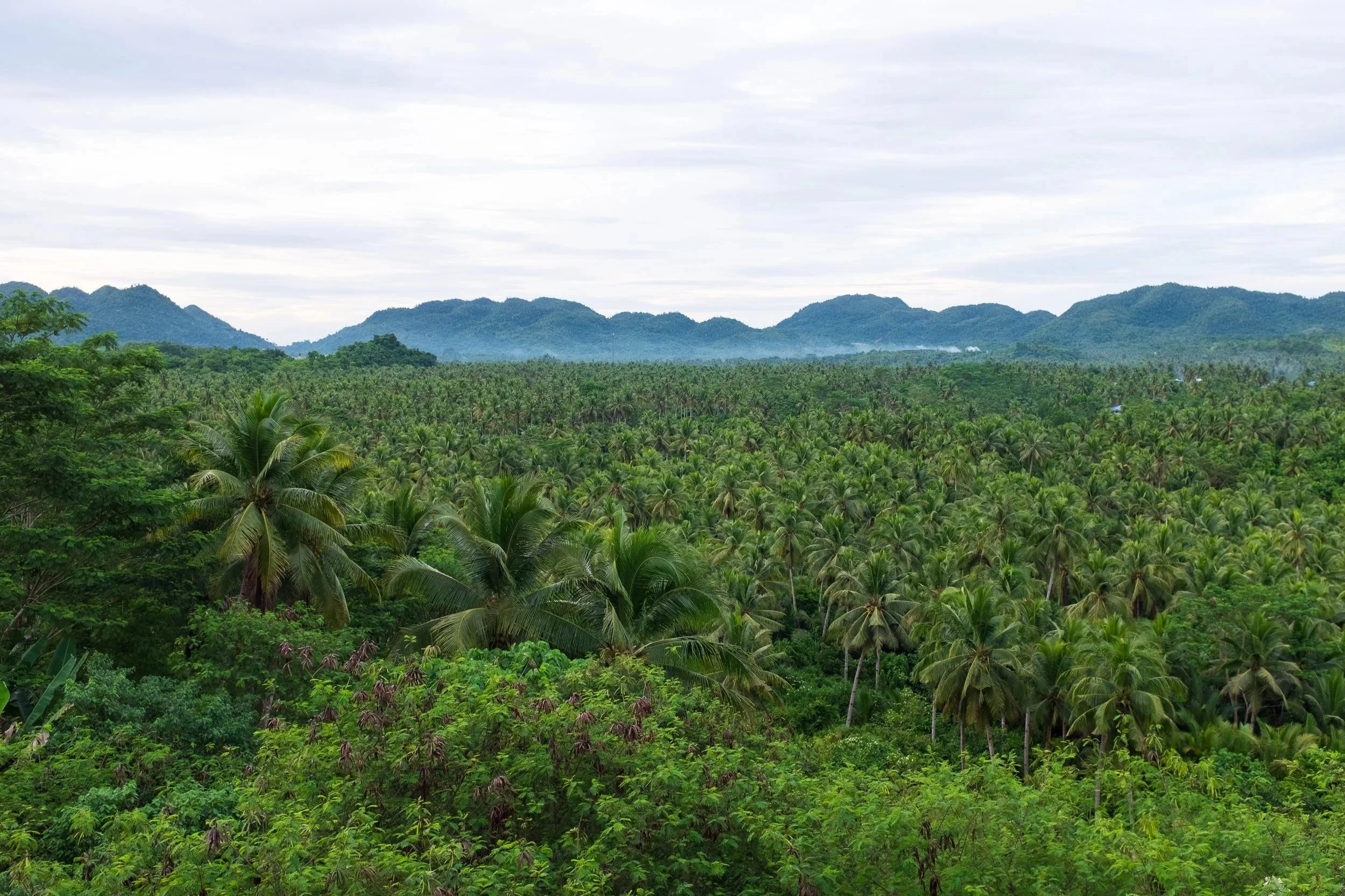
The Philippines is the world's second-largest producer of coconuts.
Siargao Island alone had 34,229 hectares of coconut plantations, producing around 10,000 nuts daily in 2021 for the extraction of copra—dried, mature, white coconut meat that forms the foundation of coconut oil.
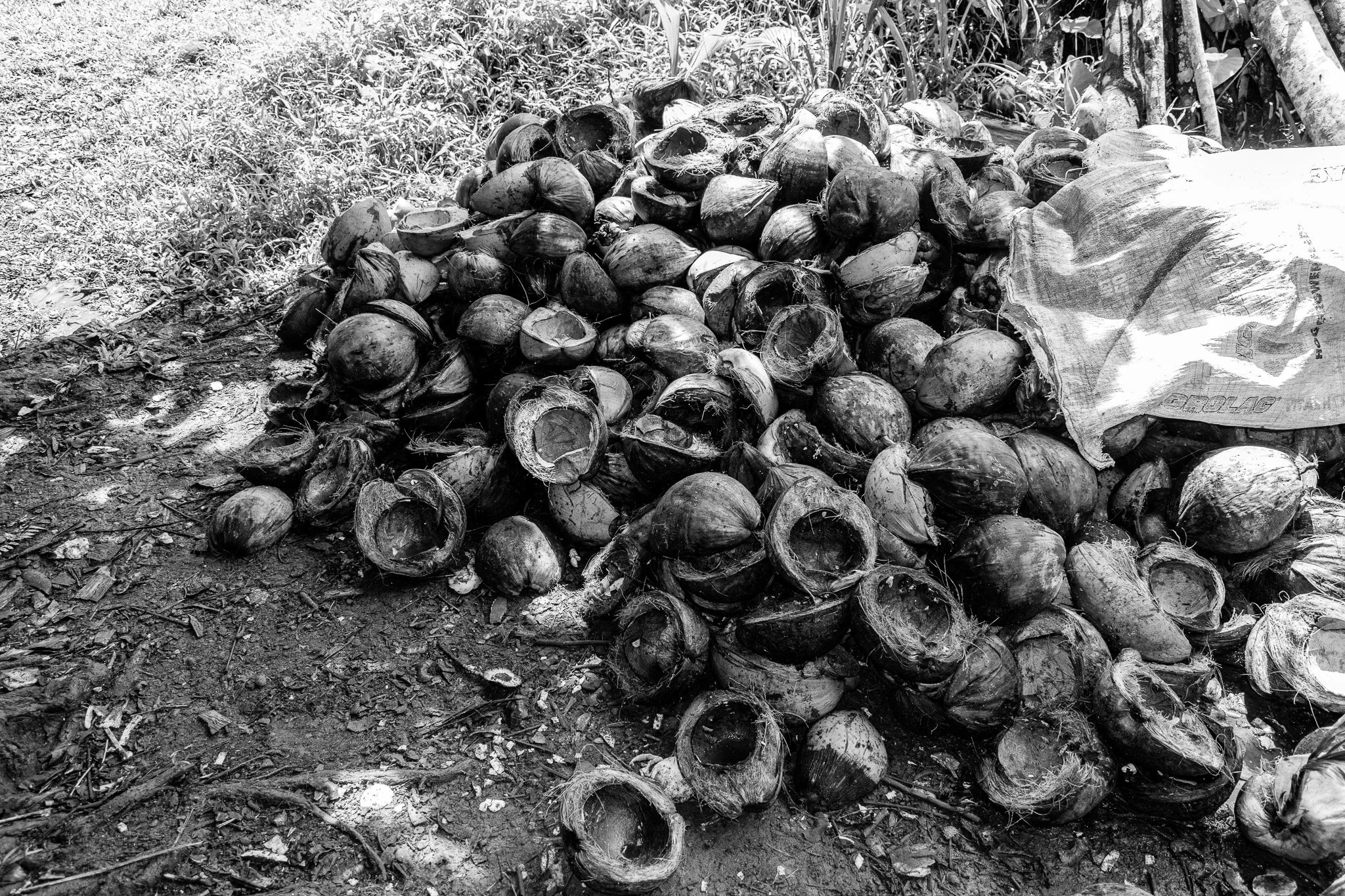
Common practices of discarding coconut waste—burning or leaving it to rot—release harmful gases into the atmosphere. According to the Philippine Coconut Authority Statistics, estimated 3.6 million hectares of coconut trees are planted in the Philippines. This produceS untapped natural resources going to waste.
And While coconut production continues to grow, coconut farmers, the agricultural heart of the Philippines, remain among the most vulnerable communities in the country. A story reflecting a broader global narrative about climate vulnerability, livelihoods, and the need for practical solutions.
A question emerged: Can coconut waste contribute to climate resilience and community resilience through material design?
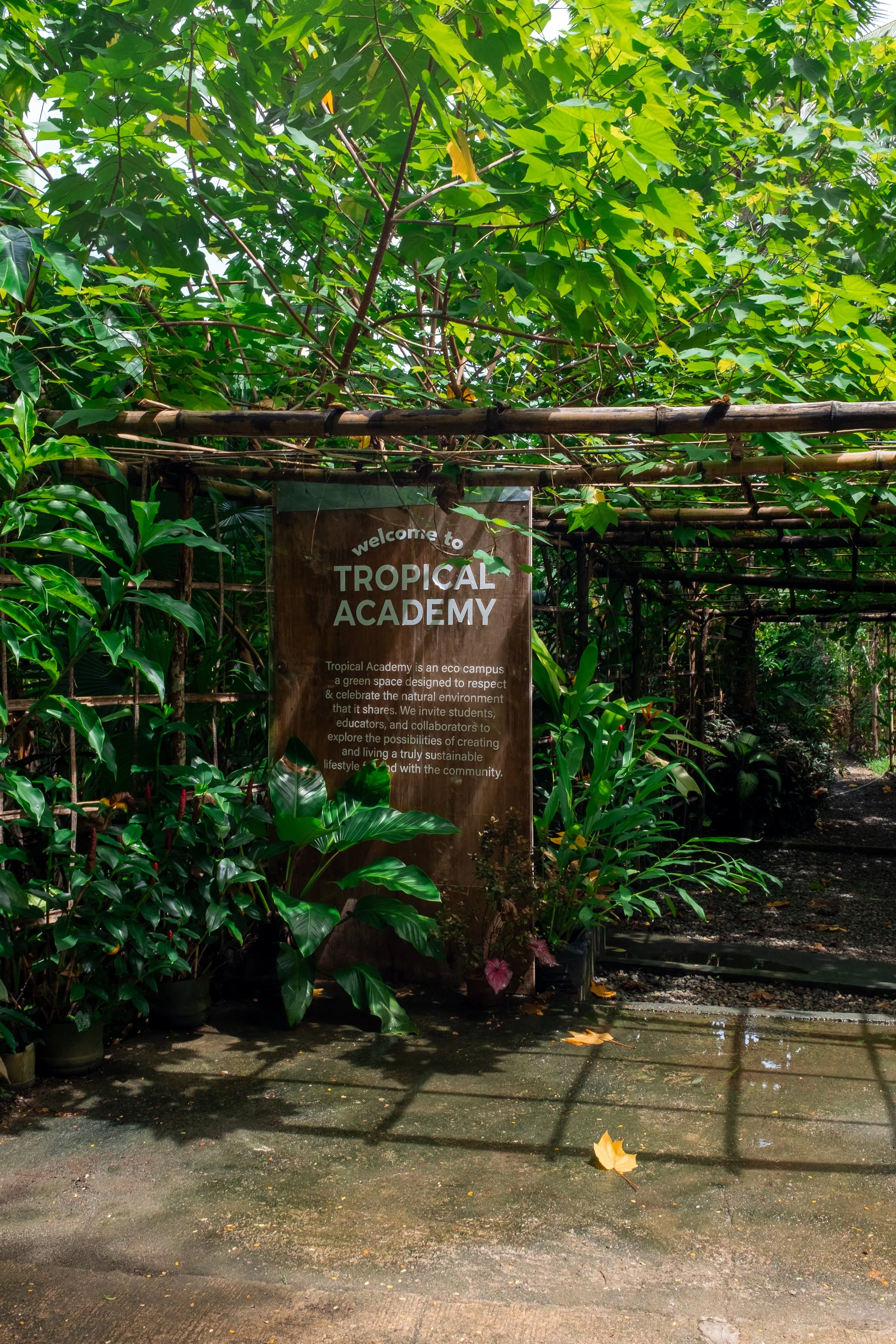
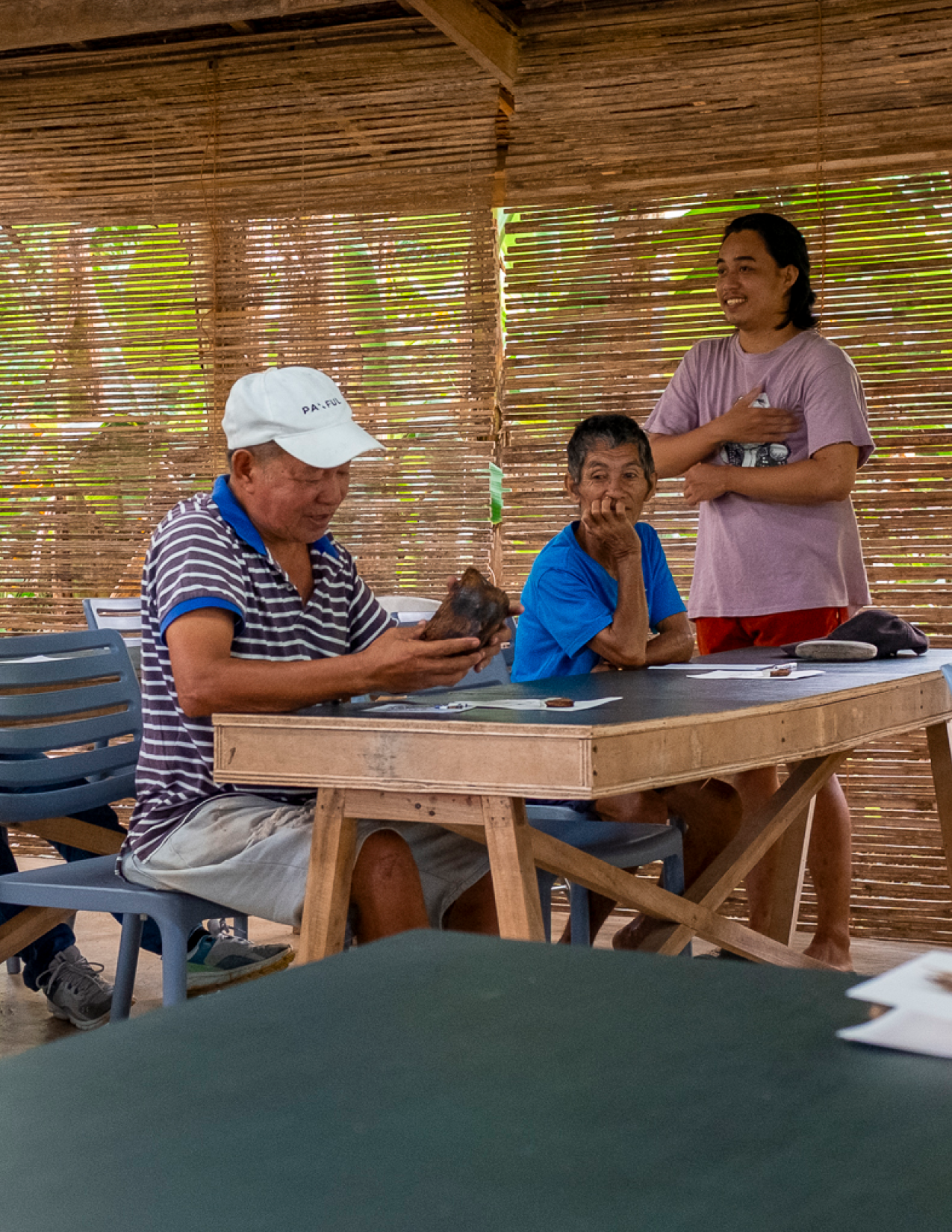
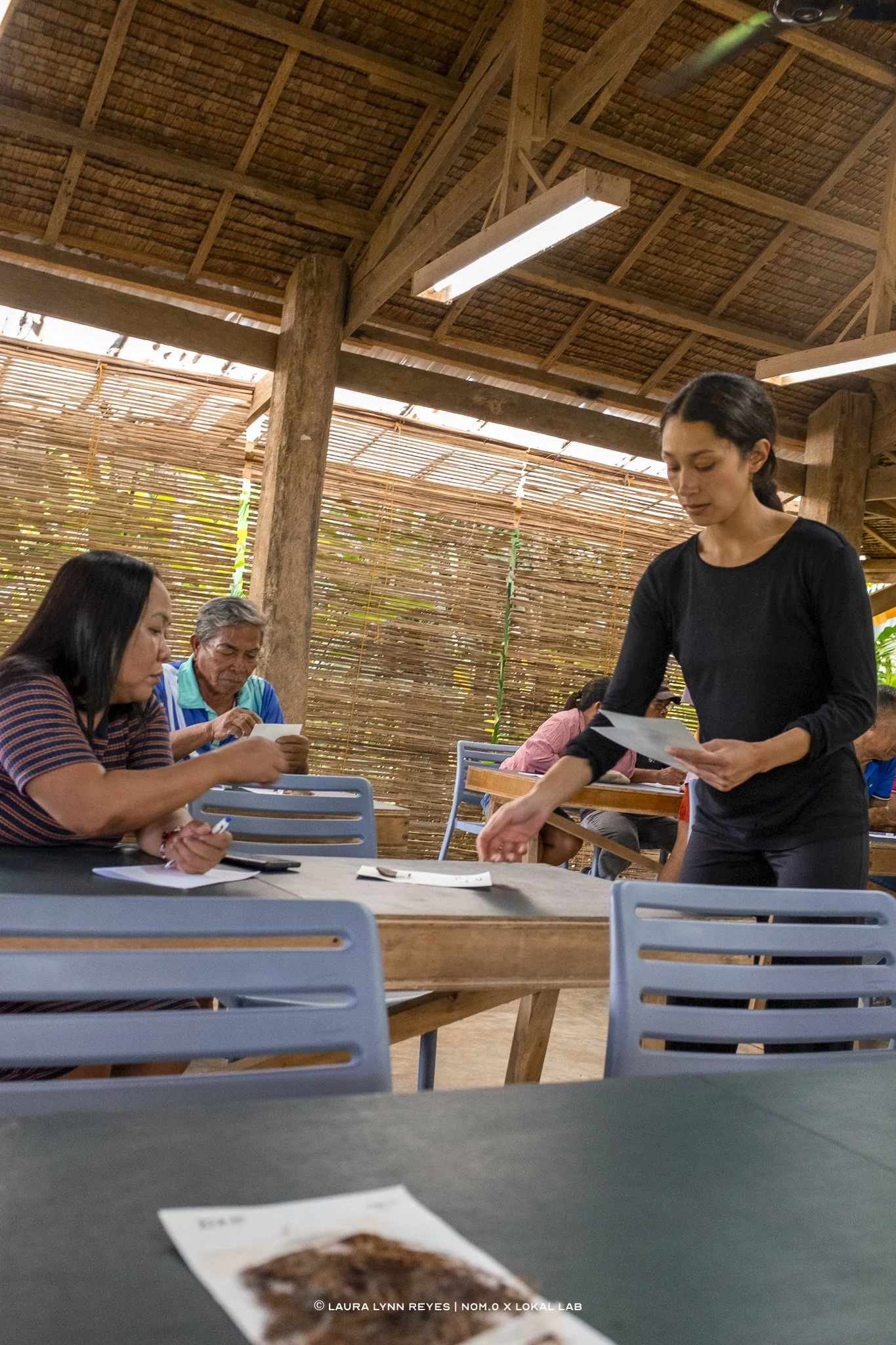
Field visits, interviews and aN Additional group discussion at the Tropical Academy, helped to understand waste streams and the challenges connected to it. Participants working in coconut farming and copra processing shared potential material uses that would resonate most in THeir everyday contexts.
Guided by Accessibilities on-Site and Especially these dialogues on waste management, copra processing, and design directions, we then shifted the research’s initial focus from shells to husks – moving the following material experiments closer to practical, locally Most relevant paths.
Drawing Inspiration from Local Copra Drying Systems
In response to Learnings From the first phase of the research, we Shifted the focus from coconut shells to husk fibers. During Material experiments We USed Only Locally Accessible Infrastructure To Explore Practical Solutions– Crucial Given the Islands Ongoing Recovery from Typhoon Odette in 2021.
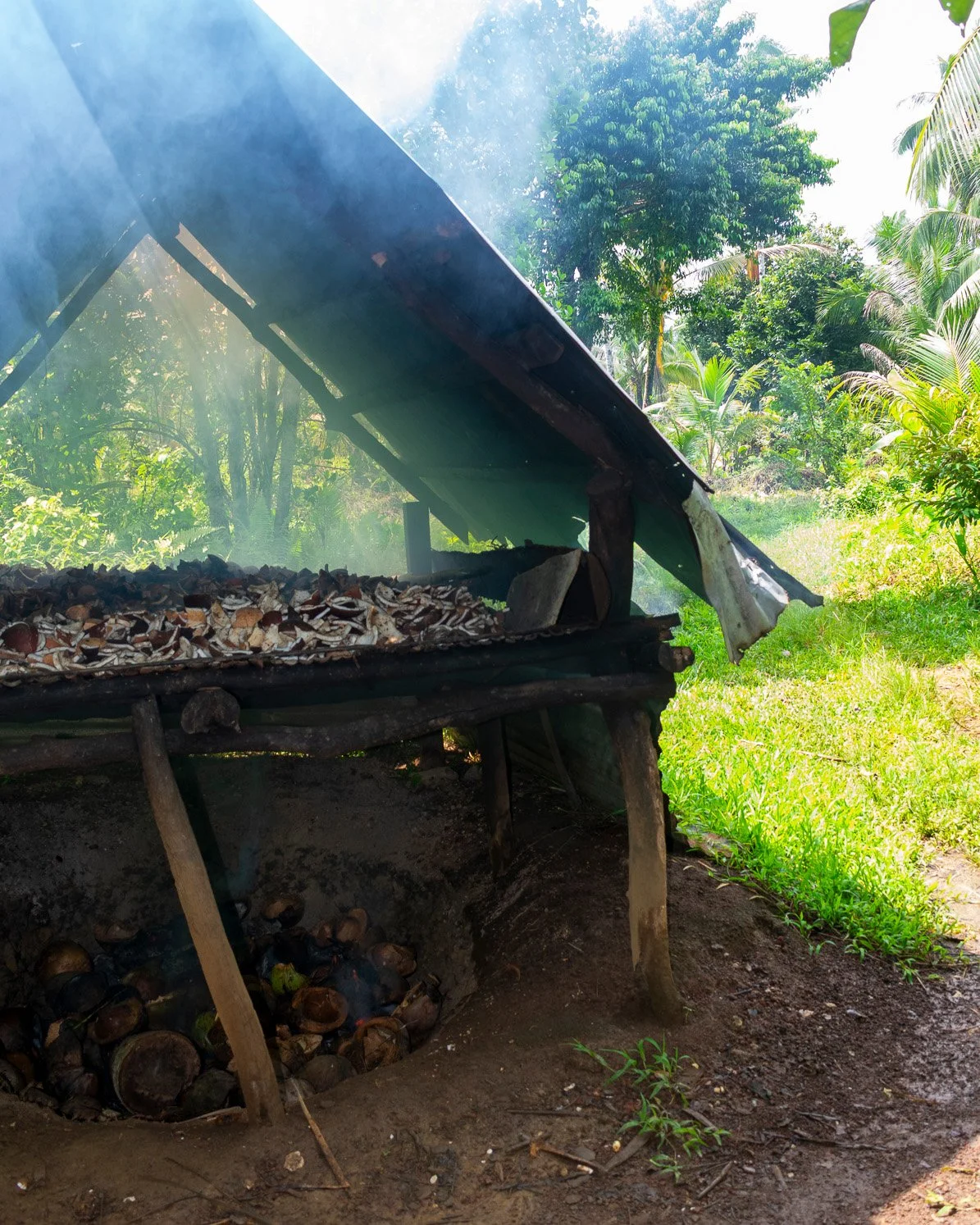
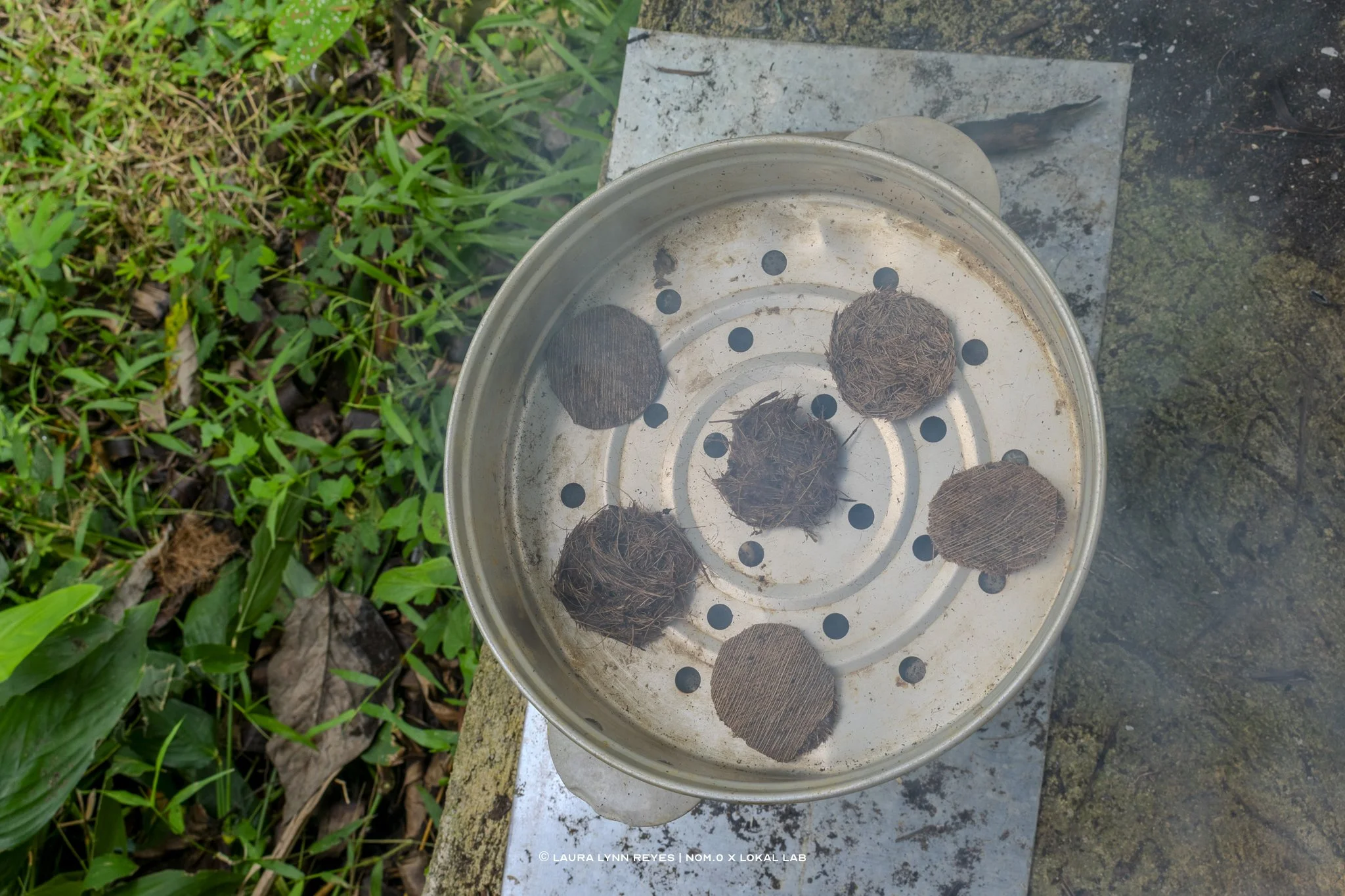
The island's consistent high humidity exceeds 70% And challengeS Material processing without additional Drying tools. The typical Tapahan system Used in Siargao, Serves as a Drying Oven for Copra Dehydration And constructed out of 3 levels.
Top Level
To protect the material from rain but let humidity and smoke evaporate easily.
Mid Level
Constructed from wood, on this level the material is placed to be dried.
Lower Level
A hole in the ground where firewood or in this case coconut shells and husks get burned to smoke and dry the material one level above.
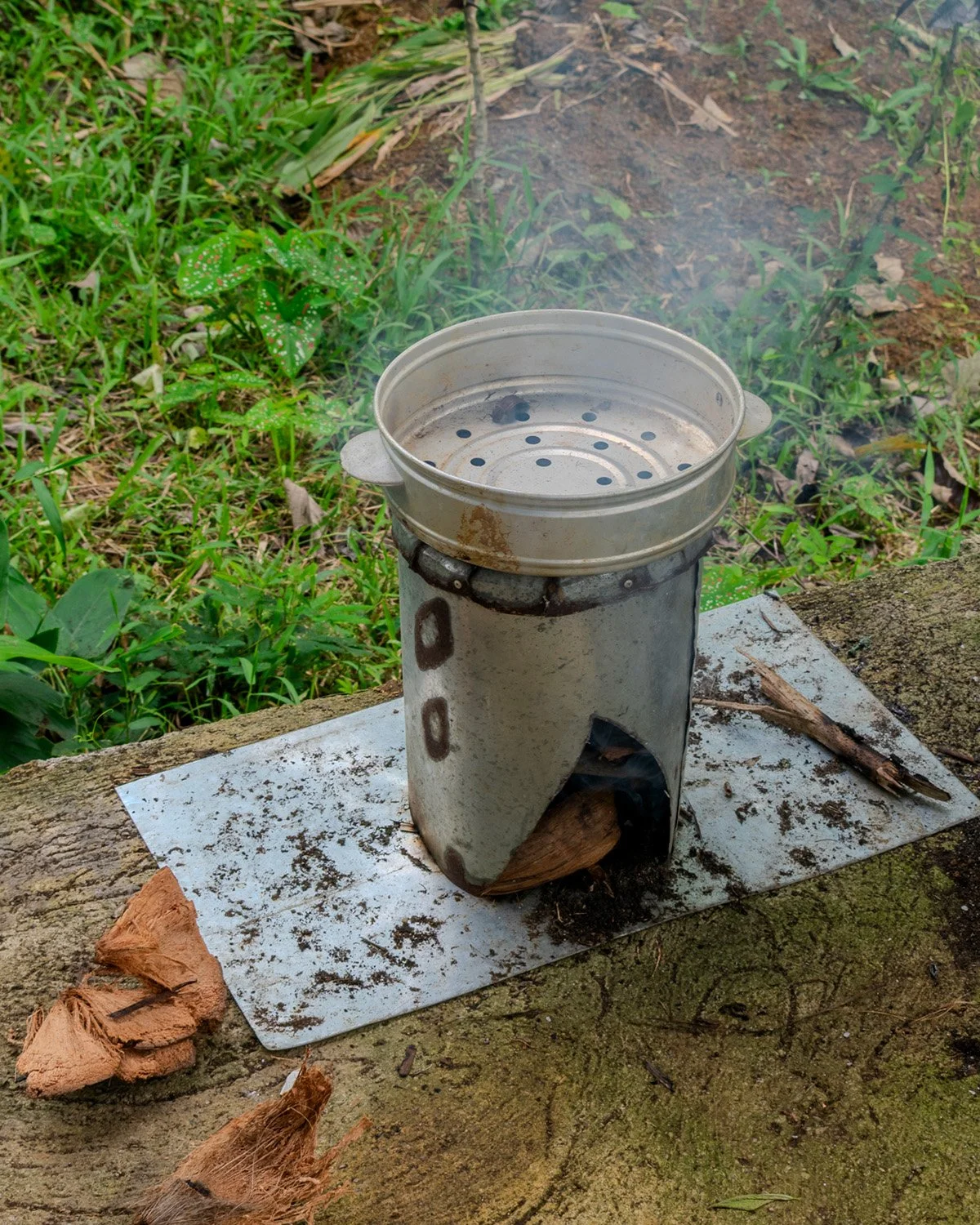
The recontextualized construction To Dry Material Tests featured the lower and mid levels. Since we conducted the material experiments in an area protected from possible rain, it was not necessary to construct additional levels for these initial tests.
Material EXPERIMENTS
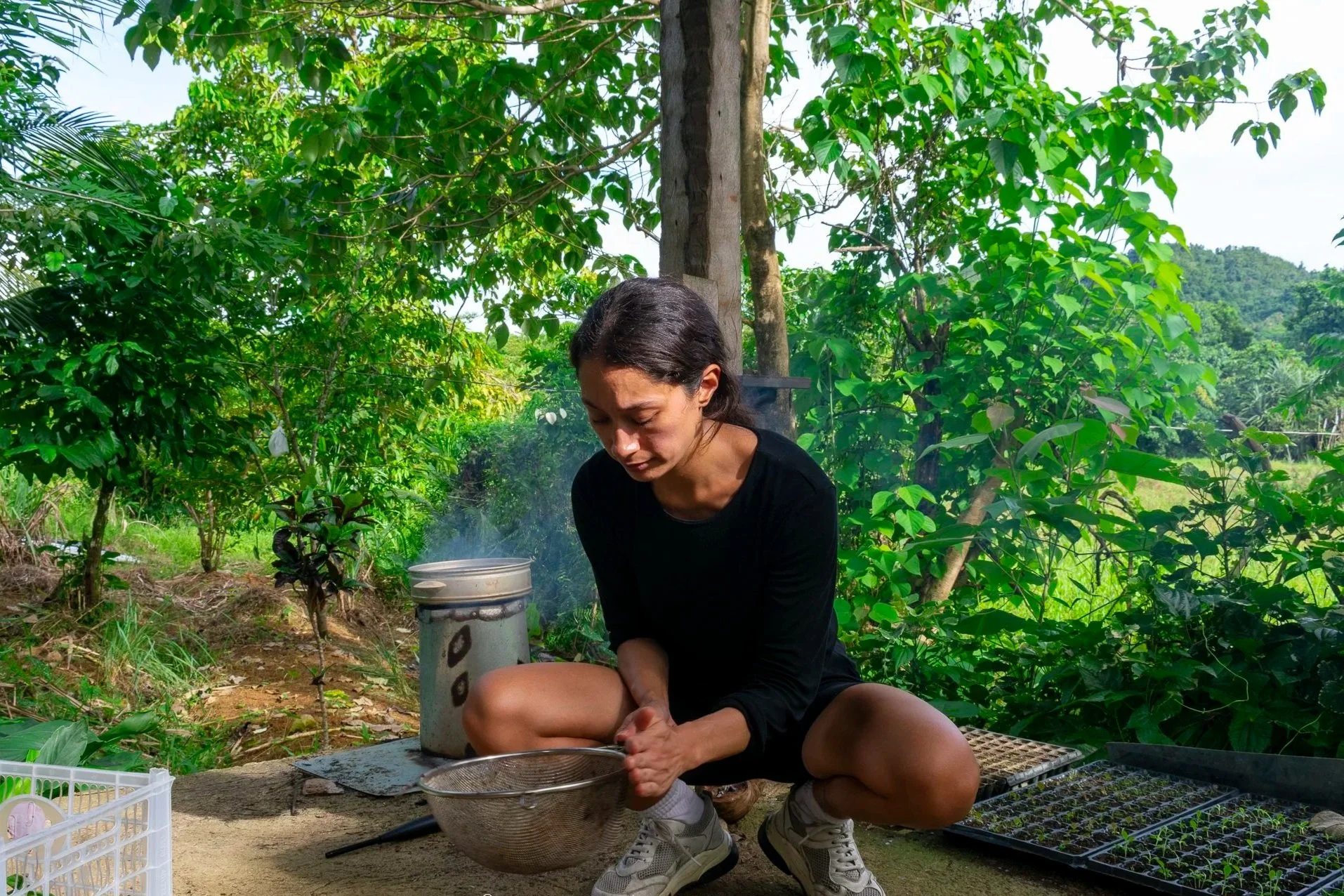
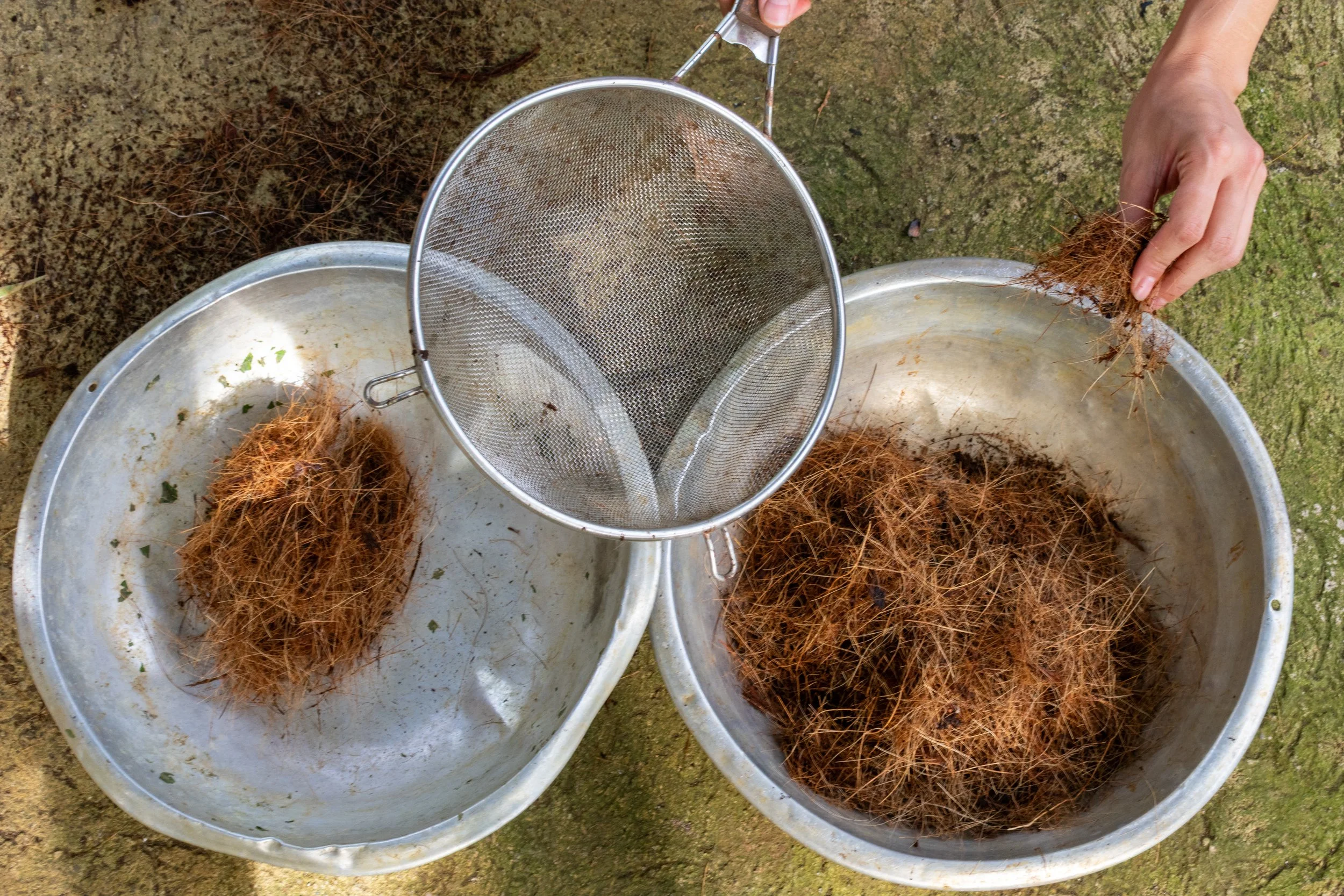
We Prepared the Husk Fibers by cleaning and through sieving.
BioComposites
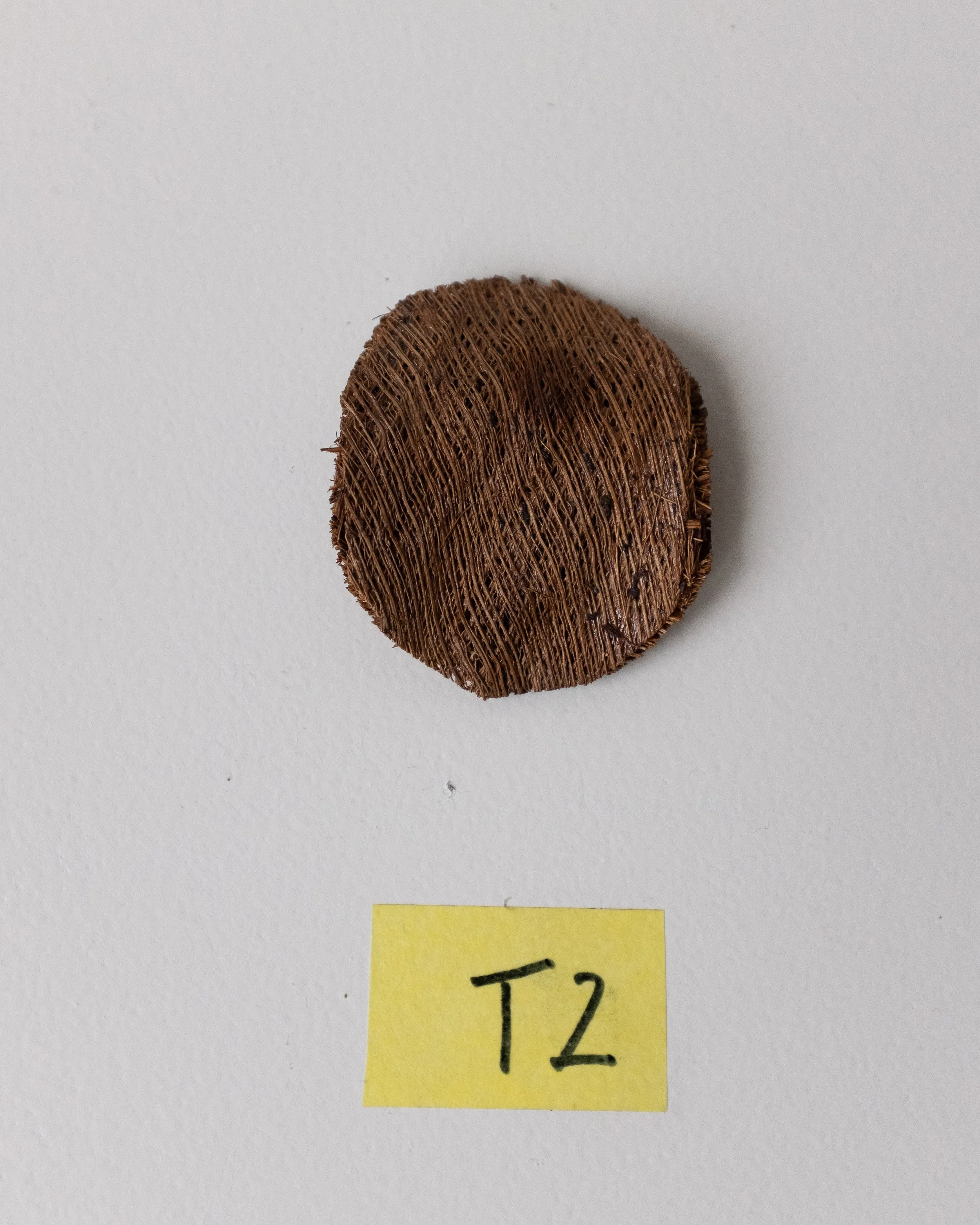
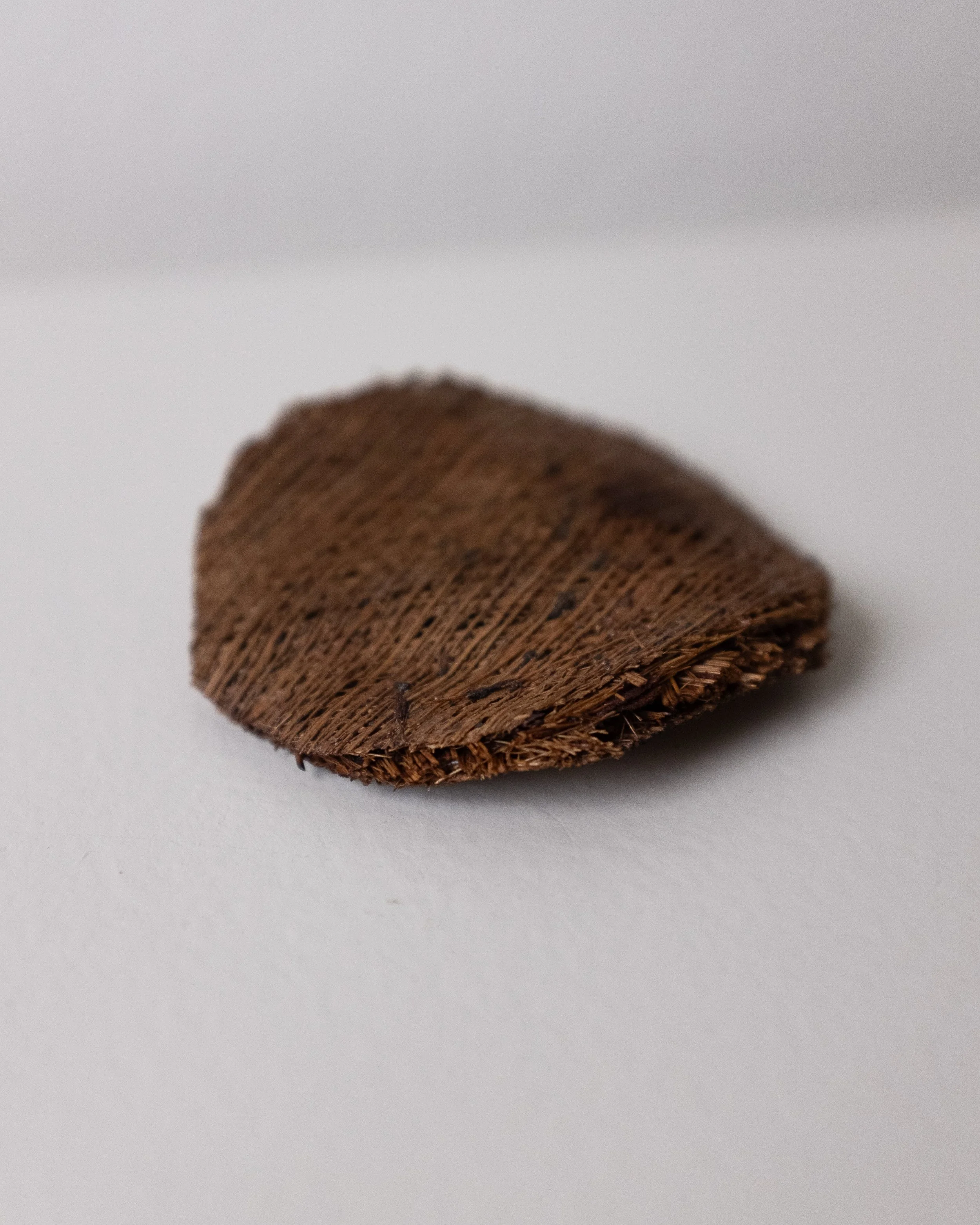
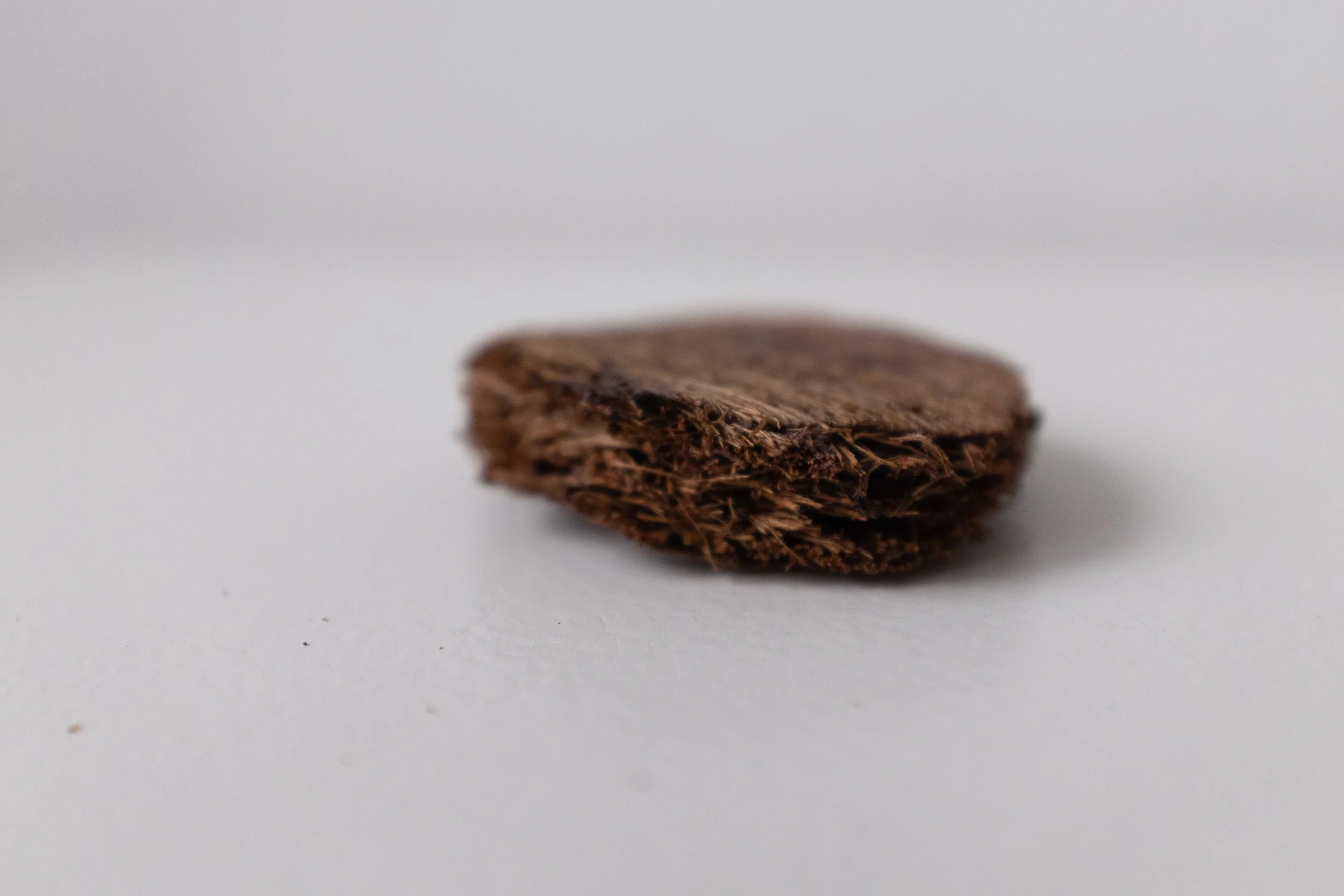
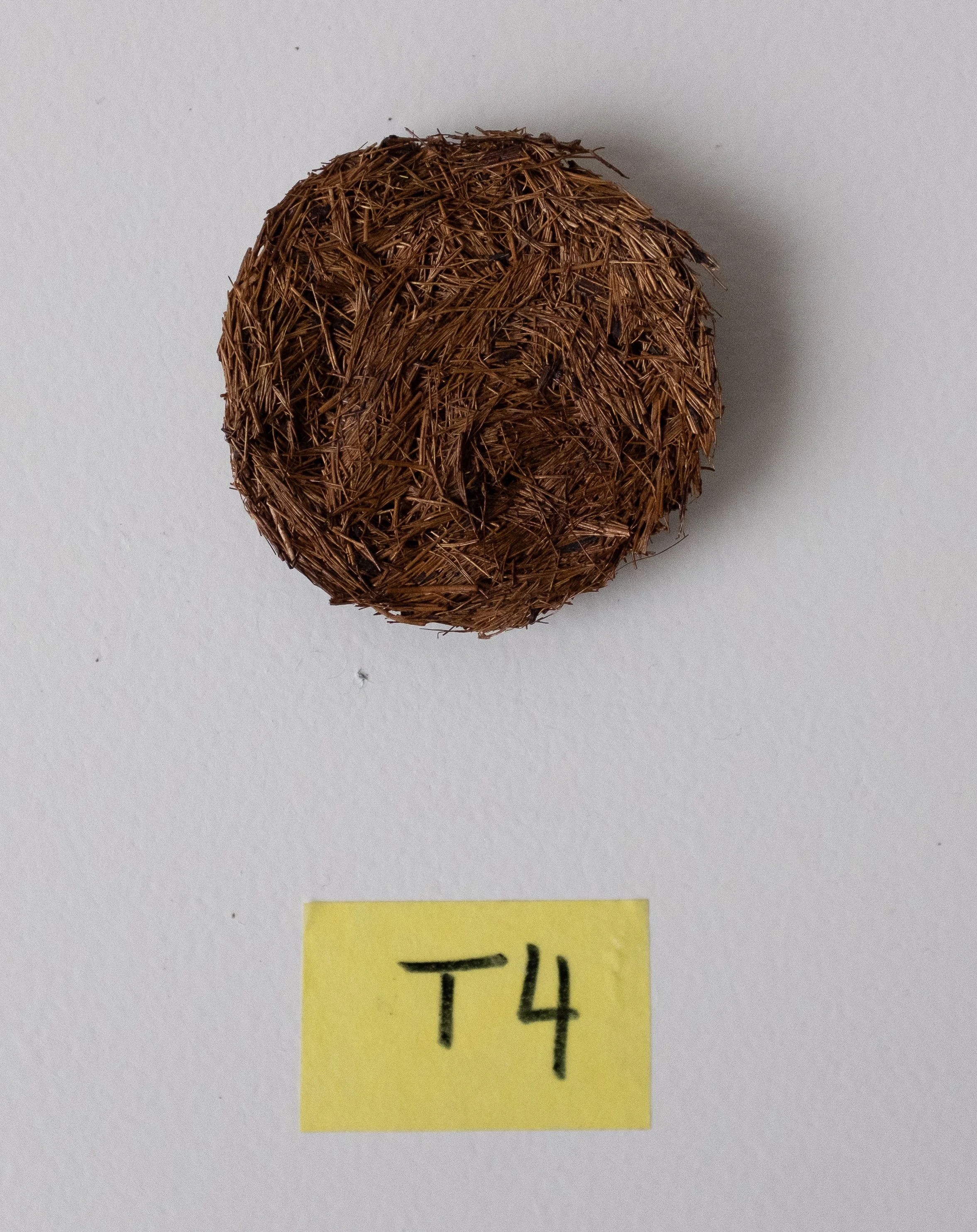
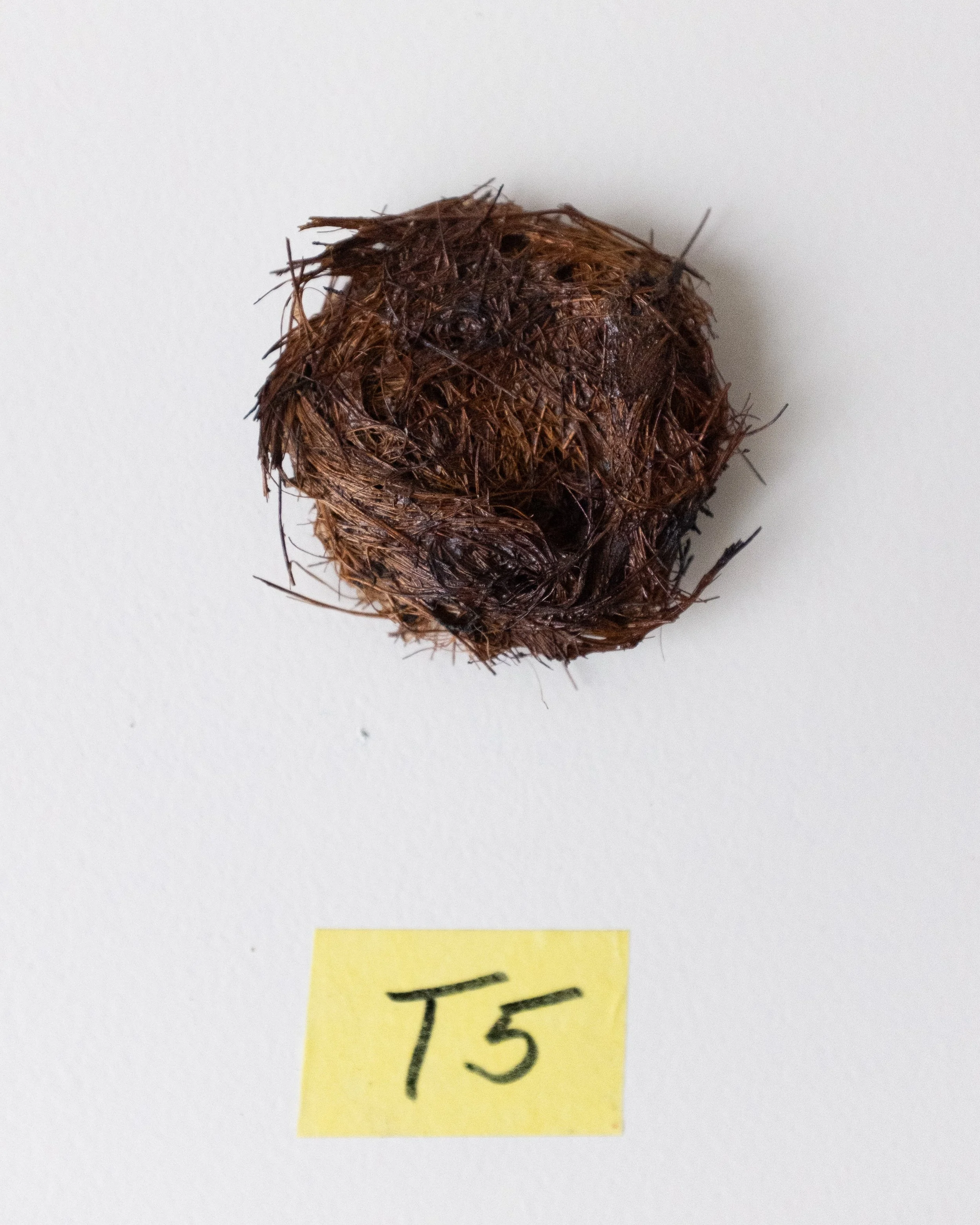
The Composition of Coconut Husks Itself Is Especially Interesting For Biocomposites. We experimented with layering and Preassure techniques, and combinations of Further coconut By-Products Before Using the Tapahan Inspired Drying Technique. Excisting application Range from Wood Alternatives, Insulation Materials Or Compostable Flower Pots–particularly interesting Since plastic BAsed Ones Release toxic microplastics into soil.
Coir GEotextiles
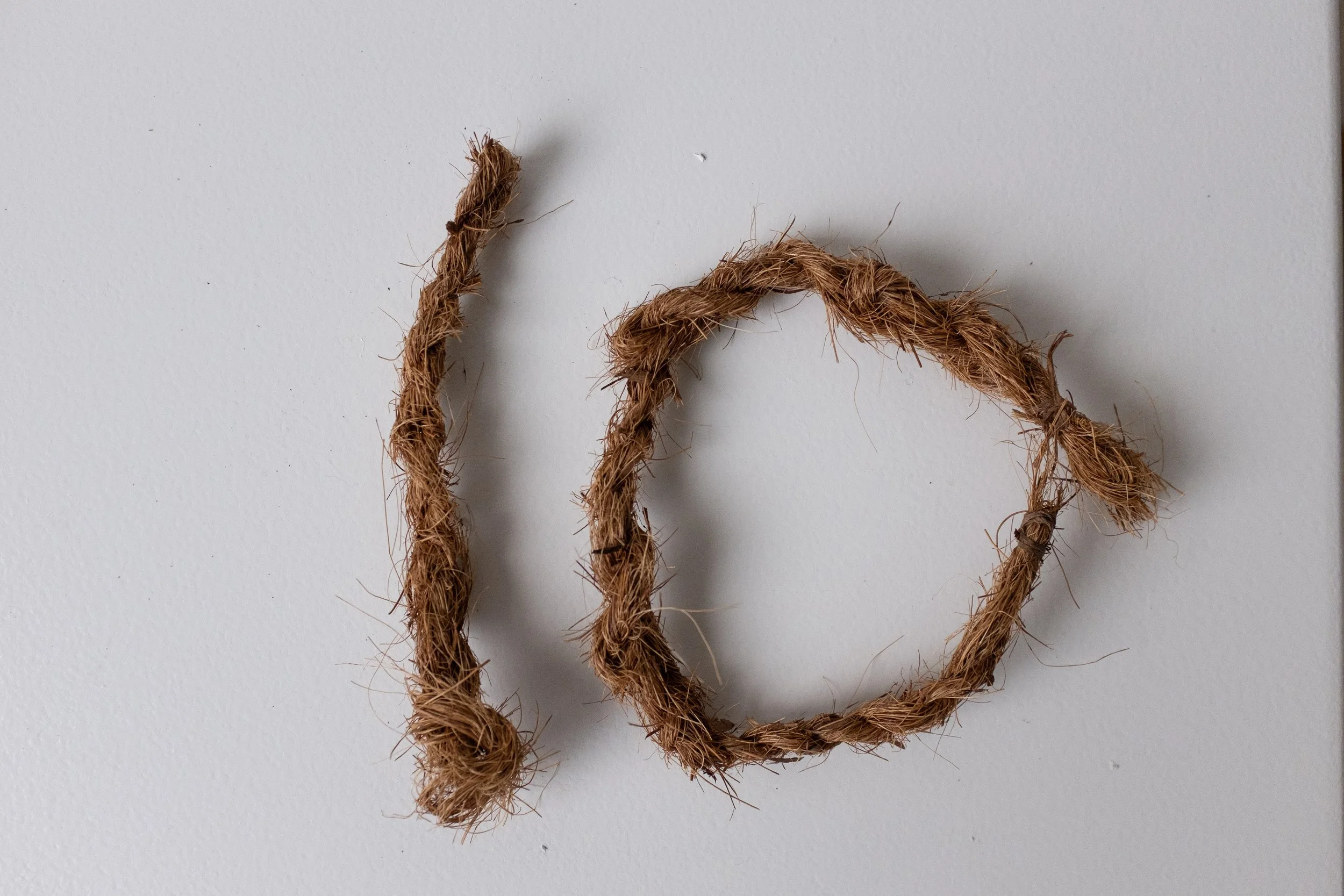
Husk Fibres Twined into Rope Samples, Even without prior skills And Short fibers showed High durability and strength. Existing applications range from doormats to Household GOods.
the Philippines geographical location And Climate Change create high exposure to natural disasters. Super typhoons like Odette in 2021 devastate agriculture and infrastructure, affecting farmer livelihoods in the long term since rebuilding Coconut Plantages takes several years before Harvesting can continue. The Climate Risk Index 2026 ranked the Philippines amongst the 10 most affected countries in the last two decades by climate change, manifesting in rising intensity of tropical storms and flooding as A SYMPTOMe.
Through Lokal Lab I've learned about applications of rope to Increase Soil Stability. Encouraged to learn more, further online research showed: Rope offers not only the opportunity to produce a foundation for practical applications of goods already mentioned but Further an opportunity for locally made and applied Coir geotextiles. These Geotextiles - made from Coconut Husk can be used to improve the stability of the soil against erosion, Especially Important as a Tool in regions with heavy rains And Frequent flooding.
An application that offers support for a fundamental challenge in AFfected REGIONs Like The Philippines - Reflecting a Broader Global Issue.
A warm thank you to The Coconut Farm Community in Siargao, To Community Coordinator And Material Research Assistant Clark Suan and the entire team at Lokal Lab For Collaborating on This Research And For The Opportunity to Learn Together With you.
Images by Laura lynn Reyes